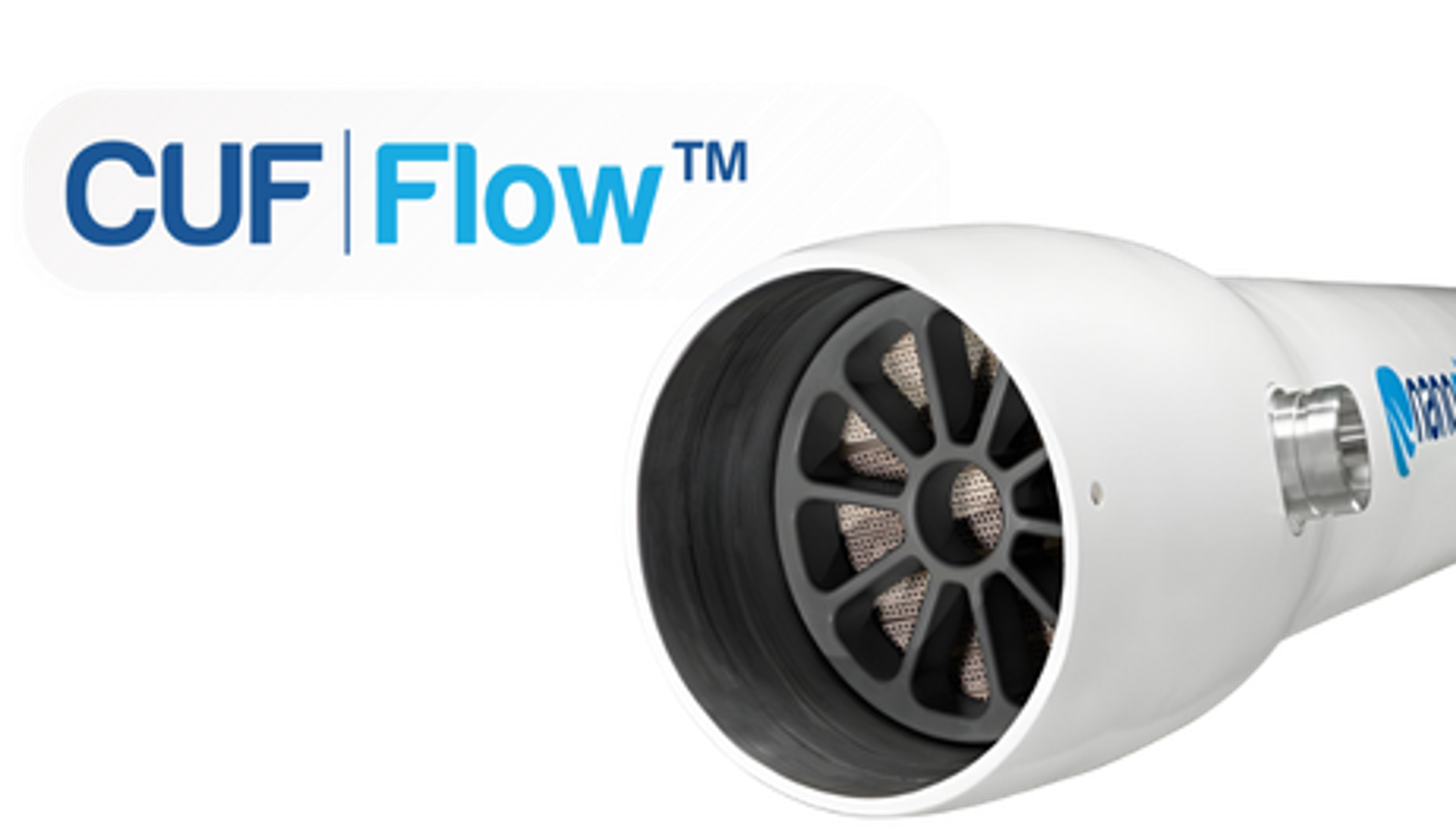
CUF|Flow™ Ceramic Membranes | The Next Generation of Ceramic UF for U.S. Utilities
CUF|Flow™
Resilient by Design:
The Next Generation of Ceramic UF for U.S. Utilities

Across North America, treatment conditions
are getting harder.
Raw-water variability, harmful algal blooms (HABs), rising natural organic matter (NOM), and harsher cleaning regimes are already stressing first-generation polymer systems. The next decade will reward utilities that prepare now with technology designed to perform under those realities, not yesterday’s averages.
Why U.S. Utilities Should Prepare Now
and Reassess Pretreatment
From Proven Heritage to Higher Performance
For more than eight years, Nanostone’s CUF|Shield™ has been Acuriant’s cornerstone ceramic ultrafiltration module, proven in hundreds of water-treatment installations worldwide.
Building on that foundation, the new CUF|Flow™ module, engineered and manufactured in Germany, introduces a step-change in capacity and efficiency. It delivers 40 percent more active membrane surface area per module in the same compact form factor.
This increase allows utilities to produce more water in the same footprint or achieve the same output with around 30 percent fewer modules, reducing racks, valves, and lifecycle O&M costs. It represents a genuine leap in design efficiency for municipal and industrial plants.
Find Out How CUF|Flow™
Fits Your Operations

Why CUF|Flow Changes the Playing Field and the Math?
- PFAS-free ceramics that simplifies future compliance with EPA and NSF standards.
- CUF|Flow achieves cost parity with alternative filtration technologies on an overnight CAPEX basis, enabled by 40 % more active membrane area, fewer modules, and simplified installation. Based on equivalent design conditions. Actual economics depend on water quality, system design, and operating conditions.
- U.S. company, German-engineered and -produced for precision, reliability, and long service life.
- Proven Nanostone platform with a global track record in hundreds of installations worldwide.
- Future-ready design flexibility: plan or expand capacity within existing footprints, minimizing or avoiding costly new civil construction.
Independent Studies Supporting
Ceramic UF Performance
Where Stress Is Already Showing

Across the U.S., the operational stresses described above are no longer theoretical. From harmful algal blooms to post-fire runoff, utilities are already seeing the limits of conventional UF systems. The following examples illustrate how quickly source-water conditions are shifting and why on-site CUF|Flow™ evaluations provide valuable data for planning and resilience.
- Great Lakes (Western Lake Erie): HAB Severity Index 6.6 shows persistent blooms, increasing turbidity and solids that challenge polymer UF recovery.
- Florida (Lake Okeechobee): Recurring cyanobacteria and warm-season HABs create fouling stress and high cleaning demand.
- Western Wildfire-Prone Watersheds: Post-fire runoff raises nitrate, arsenic, and DBP precursors, destabilizing filtration and shortening polymer life.
- Northeast (Catskills–Delaware): Floods caused sustained turbidity pulses and extended recovery times in conventional pretreatment.
- Intermountain West (Utah Lake): Frequent HAB advisories highlight nutrient-driven variability through warm seasons.
Together, these regions represent the growing variability U.S. utilities must design for. Evaluating CUF|Flow™ on their own feedwater enables operators to quantify energy use, cleaning profiles, and recovery behavior under the real stress conditions they face.
Why Evaluate CUF|Flow Now?
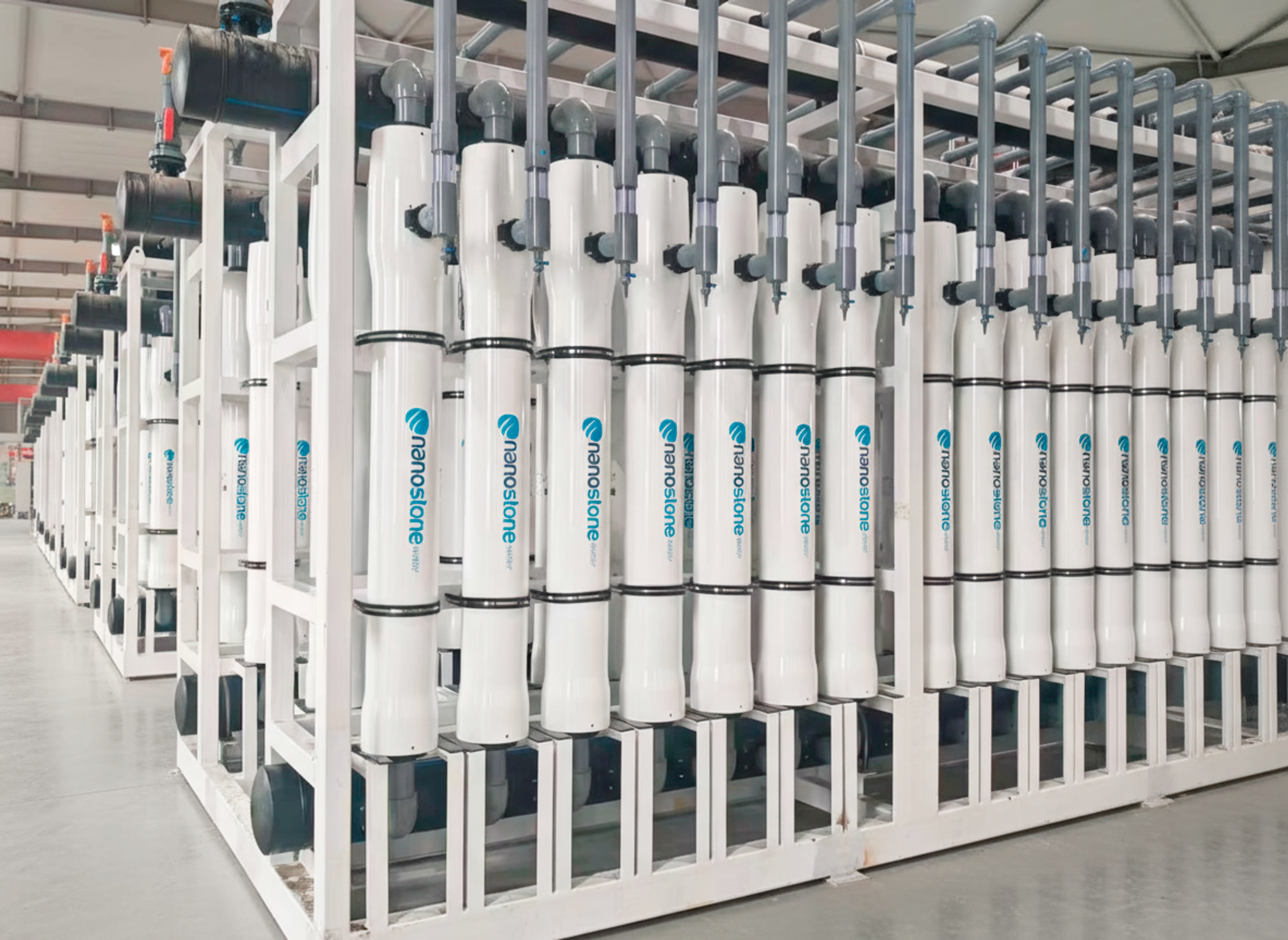
The conditions utilities will face over the next 10–20 years are already visible today. Evaluating CUF|Flow™ now allows operators to prove performance and resilience under their own source-water variability and prepare confidently for the realities ahead.
Acuriant is reserving a limited number of CUF|Flow™ modules for utility-led on-site evaluations, enabling operators to confirm CUF|Flow™ performance on their own feedwater, tailored to local water-quality variability to generate representative operational data on:
- PFAS-free compliance: Verification of a fluoropolymer-free alternative ahead of the 2028 NSF/ANSI/CAN 61 + 600 certification updates.
- Flux stability and recovery: Long-term TMP behavior and cleaning response under your feed conditions.
- Energy and O&M performance: kWh per cubic meter, cleaning duty, and operator time to establish realistic lifecycle metrics.
- Chemical and thermal tolerance: Full recovery after aggressive cleans and elevated temperatures.
Stress conditions are rising.
CUF|Flow™ is built to perform where conventional UF begins to struggle.
Book an expert call to discuss pilot setup and data objectives.
Water Can’t Wait. Neither Can We.